
Eulogies for Lost Organs
Why we anthropomorphise them, grieve them, or laugh at their loss

It was a Tuesday afternoon when I first noticed the lump. I knew then that my right testicle had to go. In that moment of dark clarity, I saw the journey laid out ahead of me: scans, blood tests, surgery, chemotherapy.
My first thought: I should throw a stupid party. After jokingly suggesting it to a couple of friends, one of them named it ‘the bye bye bollock party’ and after that, the idea stuck.
So, on the 3rd June, the date before my planned radical orchidectomy, that’s what we did. My wife had lovingly made some testicle-themed decorations and re-configured the ‘30’ balloon from her recent Birthday party to fit the theme. We played ‘pin the bollock on the David’ with a cardboard effigy of myself crafted hastily from Pampers boxes. There was even a themed quiz. And a surgeon friend had baked an anatomically accurate cake I’ll never forget. This had been my challenge to her: I want to look at it and feel physically sick. You may decide for yourself whether she delivered:
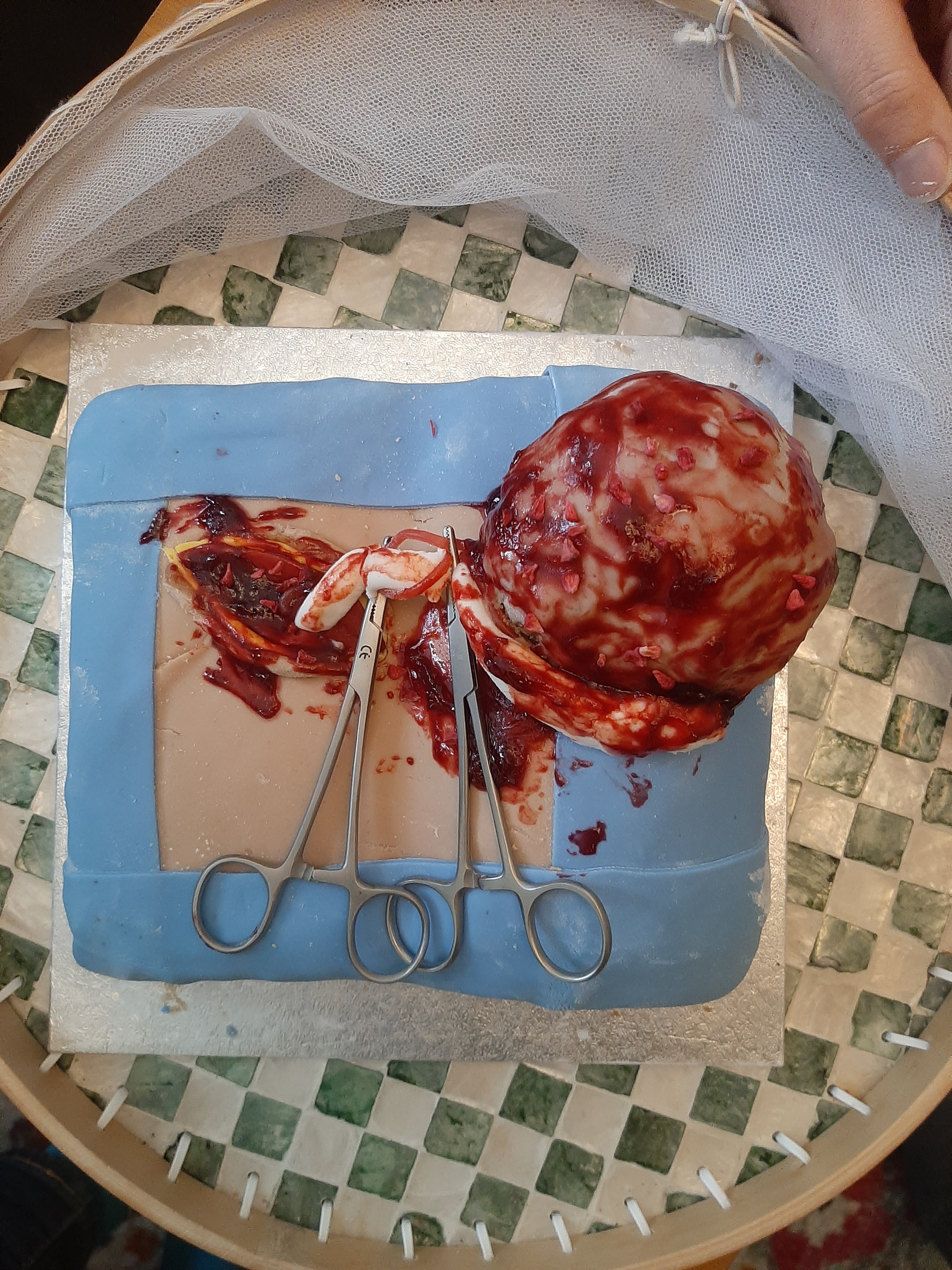
And much like the ritual cutting of the cake at a wedding, we of course performed the ritual severance of the spermatic cord before serving up slices of my testicular effigy. Another favourite moment from the party was the reading of the eulogy, which is probably too strange to reproduce here.
It’s been suggested once or twice that my sense of humour has gone astray somewhere, but I think that’s the point. I think losing an organ is both absurd and profound. It's a reminder that our bodies are modular, semi-replaceable machines. One testicle removed, the other steps up and produces double the amount of testosterone. But this doesn't make the loss any less significant. Each organ plays a unique role, and its absence leaves a void, both physically and psychologically.
This duality is what makes organ loss so fascinating. We laugh to keep from crying (maybe not all of us), but beneath the humour lies a deep recognition of our fragility. Such a concept is often better processed through ritual. A simple eulogy may be sufficient for some. But throughout history, religion has more frequently been the first port of call.
Integrity of the organs
In ancient Egypt, mummification was a complex ritual designed to ensure the deceased's passage to the afterlife. Central to this process was the careful removal and preservation of the internal organs. The Egyptians believed that the two main parts of the soul, the ba and the ka (there were other parts too but this topic would require its own article), needed a physical body to inhabit in the next world. Therefore, the body and its essential components had to be preserved, ideally forever.
Four organs, the liver, lungs, stomach, and intestines, were ceremoniously embalmed and placed in a set of four canopic jars. Each jar was dedicated to one of the four sons of Horus, who served as protectors of said organs.
Side note: do you remember the film, The Mummy? Look at this still from it:
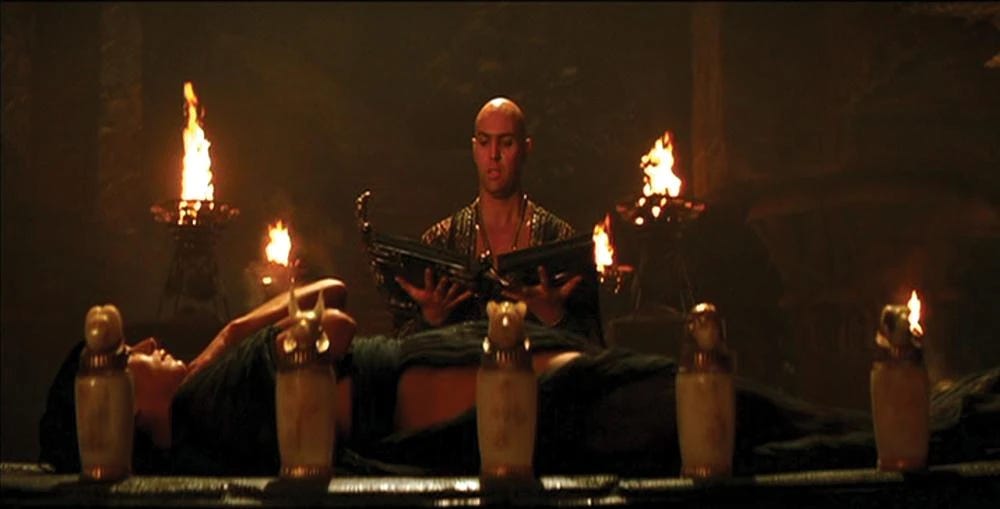
Wrong number of them! I don’t know why they did this. For the sake of symmetry?
Film inaccuracies aside, one organ needs discussion here. The heart was treated differently to the others. As the seat of intelligence and emotion, it was typically left inside the body, the most important organ by far. This is all because the heart was the organ which was weighed against the feather of Ma'at (the goddess of truth and justice) to determine the deceased's worthiness for the afterlife.
You may already know this. I dare say it’s common knowledge for the majority of my readers. But what you may not have considered is what the ancient Egyptians did with the genitalia.
Behold: Tutankhamun’s mummified penis.
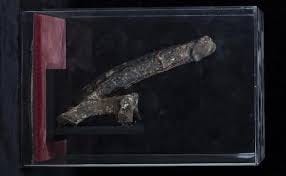
They weren’t normally mummified erect, and some Egyptologists are still trying to work out why this particular one was mummified thusly. Anyhow, it’s historically been noted that the Egyptians tended to leave the male genitalia in place. A more recent study identified a greater variety in mummification practices for these organs. In some mummies, the genitals are left intact (which is how we know that ancient Egyptians practiced circumcision), in others they are replaced by cloth replicas, and in the majority, they have been removed completely.
Why? The authors of that study suggest the practice is a ritual echo of mythology. Traditionally, Set killed his brother Osiris and chopped him into fourteen pieces. Isis, Osiris’s husband, was able to find and preserve all of these parts except for the genitals, which Set had thrown into the Nile whereupon they were consumed by fish. She therefore created a replica in order to complete her husband and bring him back to life. It’s thought that this is why some male genitalia have been found mummified and placed inside a statuette of Osiris— a way of commemorating Osiris’s…trauma.
So we see how in Egyptian mythology, every organ had its story. Each organ was commemorated, celebrated, in a particular way. This is not so in later religions.
Integrity of the whole body
While the ancient Egyptians may have honoured individual organs, the Abrahamic religions have traditionally emphasised the importance of a whole body for burial, tied to beliefs about the resurrection of the dead.
In Judaism, for example, cremation is forbidden. Jewish law dictates that the deceased must be buried promptly and their body remain intact, symbolising the respect owed to a person created in the image of God. This belief extends to the rejection of embalming and autopsies unless absolutely necessary by law, as these practices are seen as a desecration. Yes, it’s a bit of a pain for coroners on the weekend. So why is this so important? Simply put, preparation for the messiah. The body is seen as a sacred vessel, and its return to the earth in a complete state is an act of faith in the future resurrection of the dead, which will happen when the moshiach (the Hebrew whence derives the English ‘messiah’) arrives. However, most authorities don’t really believe the resurrection will be physical nowadays, but that it’s our souls, our spiritual ‘bodies’, that will rise up in the olam haba (‘world to come’.)
Similarly, Islam strictly prohibits cremation, viewing it as a defilement of the body. Islamic belief holds that the body is a trust (amana) from Allah and should be treated with the utmost respect. The tradition of burial, with the body facing Mecca, is rooted in the belief that the body will be resurrected on the day of judgment (what exactly happens on this day varies wildly between sects). So the grave serves as a transitional state (barzakh, literally ‘barrier’ or ‘obstacle’) where the soul awaits this final resurrection.
Even within Christianity, particularly in its earlier forms, burial was the preferred and often the only accepted practice. Early Christians, influenced by Jewish tradition, rejected the Roman practice of cremation. The burial of the body was seen as a powerful symbol of Christ's own burial and resurrection, and a testament to the belief in the future resurrection of all believers. While many modern Protestant and even Catholic denominations now permit cremation, traditional burial remains a deeply rooted practice.
So what I’m about to describe might be somewhat surprising.
Relics as power
The Middle Ages provided a weird counterpoint to the ‘whole body’ doctrine through a pervasive cult of relics. While the average person was expected to be buried intact, the remains of saints were a sacred exception. This strikes me as strange, but perhaps saints were so assured of eternal life that they didn’t need to be preserved whole.
If you’re now wondering why relics were so highly valued, it’s because the body parts of saints were believed to be conduits of divine power, possessing the ability to perform miracles, heal the sick, offer spiritual protection, provide unlimited rice pudding etc. etc. These sacred objects were categorised thusly:
First-class relics: A part of the saint's body itself, such as a bone, a lock of hair, or even a preserved organ. All the most prestigious churches and monasteries had one of these.
Second-class relics: An object that the saint owned or frequently used, like a piece of clothing or a prayer book.
Third-class relics: An object that has touched a first- or second-class relic. This would’ve allowed medieval Christians a very exclusive insult: YOUR FACE is a relic, specifically a third-class relic. And writing this this made me realise I have no idea whether this school-kid level joke translates well outside of Great Britain.
This led to a flourishing, and sometimes dubious, trade in holy body parts. The tongue of St. Anthony of Padua, for example remains on display in a reliquary in Padua, Italy, a testament to his powerful sermons.
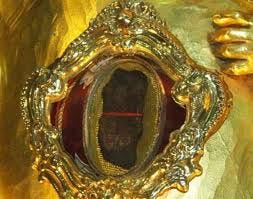
The skull of St. John the Baptist is claimed by multiple institutions across Europe. No comment.
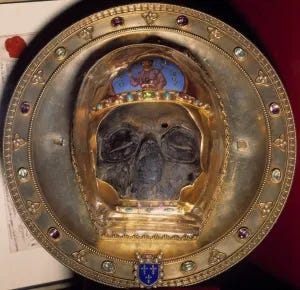
I’m not going to get into the specifics of testicular relics. Besides, my search history has taken enough of a hit already researching for this article. But, in short, the veneration of relics was a cornerstone of medieval pilgrimage, with shrines housing them becoming major destinations.
Interestingly enough, the veneration of human body parts as relics seem fairly unique to Christianity. The closest practice in Judaism, for example, is the veneration of the graves of the great Rabbis. Because these people were closer to God, their graves are similarly thought of as divine conduits. Even today, pilgrims still visit these graves, tossing in their prayers on scraps of paper.
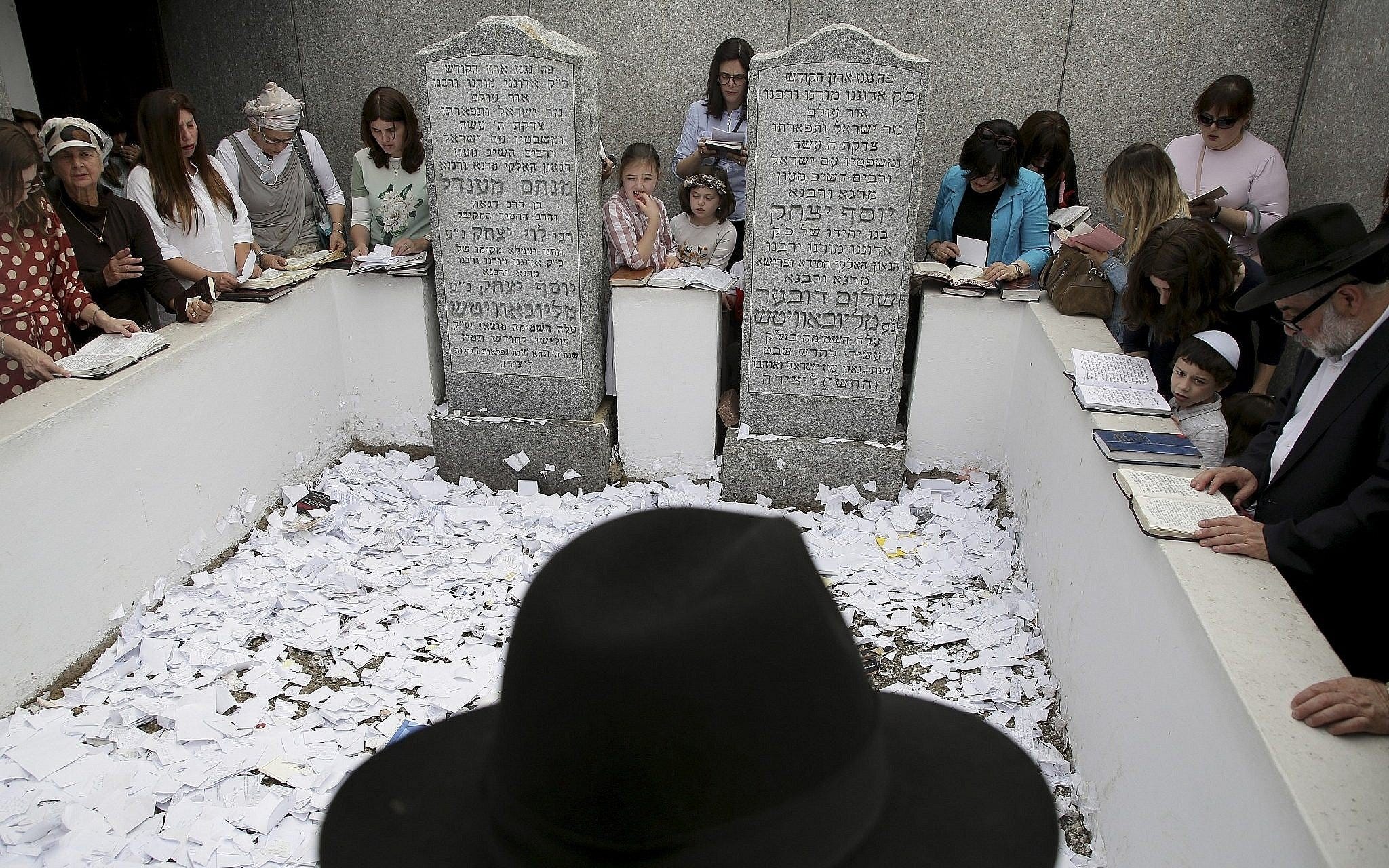
In Islam, relics do occur but they tend to be third-class. At a push, you might find the hair, blood, or footprints of a prophet. Bones, however, are untouchable. The largest collection of Islamic relics can be found at Topkapı Palace in Istanbul, known as The Sacred Trust, if you’re interested.
In summary, collecting body parts could be a religious practice. But not always.
Relics as curiosities
While the Egyptians and medieval Europeans treated removed body parts with great reverence, history also offers more peculiar and even comical examples.
One of the most famous and unusual cases involves the penis of Napoleon Bonaparte. Following his death in exile on the island of St. Helena in 1821, a private autopsy was conducted by a strangely large team of British and French surgeons. Napoleon’s own doctor, François Carlo Antommarchi, is said to have removed Napoleon's penis, given it to his priest, who then smuggled it out of the country back to Corsica (where, uh, it was born). This peculiar relic was passed down through a series of collectors, eventually ending up in the possession of an eminent urologist, John K. Lattimer, whose family has kept it ever since. The authenticity of the relic is, of course, a matter of much debate and historical folklore, for people who like to debate such things.
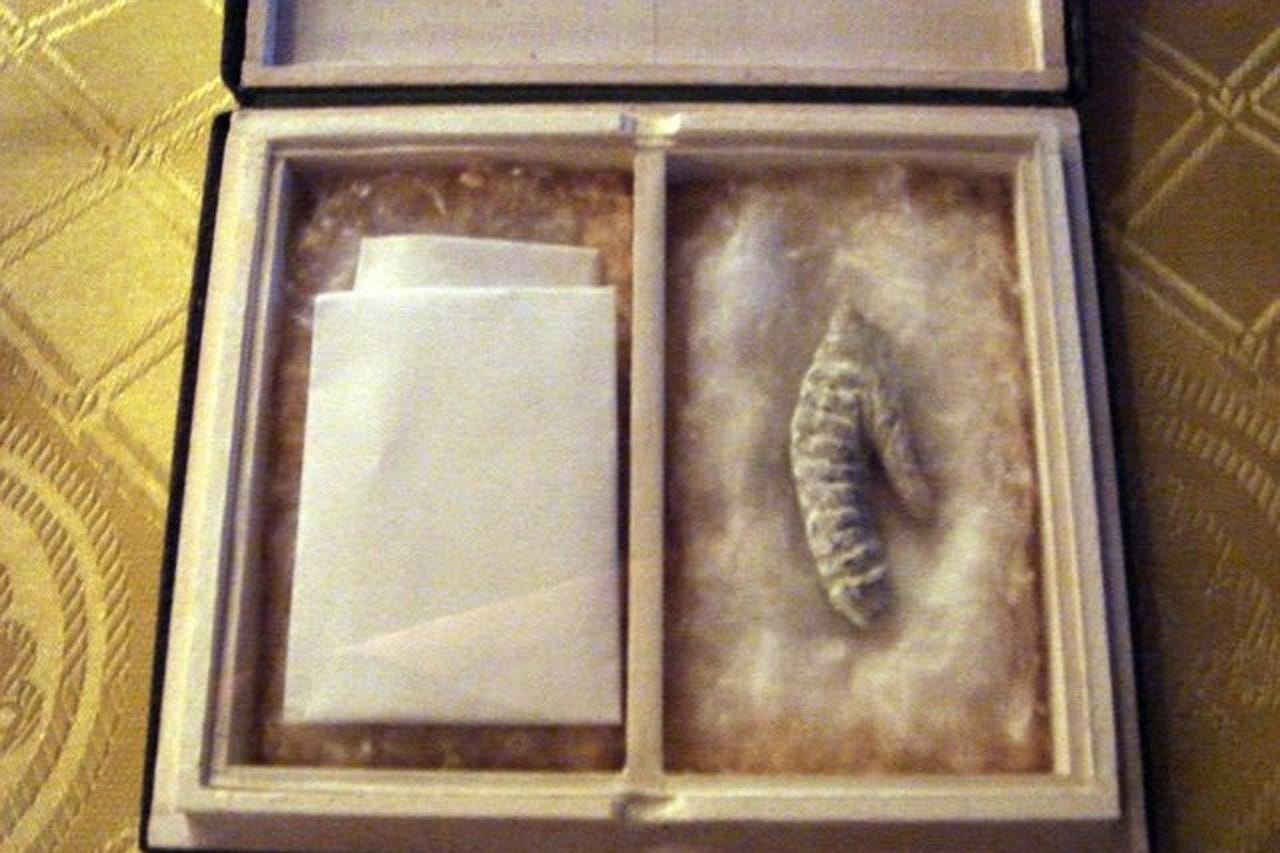
I personally believe this is a weird artefact to own, even for a urologist. You won’t find me storing people’s eyes, for example. I do have the eyeball of a parrot fish preserved in formalin, but I dissected it out myself and personal mementos are not weird.
Talking of weird, I now feel obligated to discuss what must be the weirdest theory about lost organs.
The second life of organs
Imagine I donate a kidney to you. Will it come with a side love of dissecting sharks? You might say probably not, but many would disagree. The idea that organ recipients can inherit personality traits, memories, or preferences from their donors is an exciting if controversial topic.
There are numerous anecdotal accounts and a handful of studies that have explored this phenomenon, often referred to as cellular memory or systemic memory. This hypothesis suggests that cells outside the brain, in organs like the heart, liver, or kidneys, can store some kind of information or undefined energy that is transferred to the recipient, influencing their personality.
Most of the evidence for personality transfer comes from personal stories and small case studies, many popularised by neuropsychologist, Dr. Paul Pearsall. His book, The Heart's Code, documents stories of transplant recipients who reported inexplicable changes, such as:
A recipient of a heart from a young musician suddenly developing a passion for classical music they previously disliked.
A woman who received a heart from a teenage boy killed in an accident and subsequently craving his favorite foods, like Kentucky Fried Chicken and green peppers.
A recipient having dreams or memories of their donor's final moments, including a flash of light that correlated with a gunshot to the face.
I’m not going to drain the magic by boring you with talk of confirmation bias and other psychological effects that’d probably explain these stories. Also consider: it’s not completely implausible that memories are stored outside of the brain, given the complexity of the peripheral nervous system. For example, the gut appears to ‘think’ independently, for a given value of ‘think.’ And in some animals, this is the rule rather than the exception. For example, the nervous system of an octopus is a lot more decentralised. Their limbs ‘think’ independently as a result.
What I will say is that 89% of organ recipients report personality changes. These things are not rare if you ask about. Realistically speaking, the human body is a complex enough set of interconnected systems that a non-spooky explanation is probable, but if you’re a religious type, you can’t help but wonder of the immortality of the soul. Admittedly, this comes with many awkward questions. Is the soul split evenly between my organs, or do my kidneys have less of it? What’s keeping my soul attached to my kidneys anyway? Can I detach it and link it to my other organs before donating my kidneys? I’d prefer to keep all of my soul, thank you very much. If you like, you can replace the word ‘soul’ in those questions with ‘personality’ and remain just as confused.
Or concerned?
Reader, did I lose a part of my essential self in that cancerous testicle? Will I ever be the same person again?
Conclusion
Organ loss is not a rare occurrence in modern societies. The infected appendix; the stone-carrying gall bladder; the ischaemic limb of diabetes. All are perennial casualties in the battle to stay alive and healthy. So it’s likely you’ve lost something too. In the spirit of embracing the absurdity of our existence, I therefore encourage you to write your own organ eulogy. Reflect on the body parts you've lost, even the minor things like milk teeth, toenails, hairlines. Give them the farewell they deserve. Perhaps your appendix was the unsung hero of your digestive system, or your gallbladder was the cantankerous relative who finally moved out. Whatever the case, honour their contributions with a fitting tribute.
Remember, in the grand scheme of things, we're all just temporary vessels. So, let's raise a glass to our lost organs!